Pages

Friday, June 5, 2015

Reviews: Some Recent Films


The Falling (Carol Morley, 2014)
When one of the pupils in a late-1960s all-girls school suddenly drops dead, her best friend starts displaying the same symptoms, her classmates following suit.  Are they sick?  Cursed?  Faking it?  Or is it all in their heads?  This bewitching exploration of teenaged sexuality provides no easy answers to these questions; however, for my part, I would actually have prefered it to be more ambiguous, as I felt the solution too heavily implied, perhaps due to the amount of coverage of Morley's research into mass hysteria.  Still, if you've ever wondered what would happen if Girl, Interrupted met The Devils, this is the film for you.  It's beautifully shot, edited, and sound designed, and the big revelation will leave you stunned.

A Royal Night Out (Julian Jarrold, 2015)

It's VE Day, and all of Britain has taken to the streets to celebrate.  All, that is, except for the royal family.  When Princesses Elizabeth and Margaret finally convince their father to let them go out incognito, it looks like they're in for a dull evening with some stuffy old courtiers, but then Margaret runs off, and it's up to Elizabeth, aided by an AWOL airman, to find her before she causes a scandal.  A cute little film that would have perhaps been better suited to television, A Royal Night Out was filled with a lot more humour than I expected it to be.  I had trouble, though, suspending disbelief for this mostly-made up tale (a recent Channel 4 documentary on the real royal night out suggests that their evening was far tamer); while Princess Margaret's characterisation was wholly believable, it was hard to imagine the Queen as a young princess.

Mad Max:  Fury Road (George Miller, 2015)
When Furiosa, one of the Citadel's most respected tanker drivers, helps the warlord's favourite "brides" run away, it provides the perfect opportunity for Max to escape.  Circumstances bring them together, and Max and Furiosa team up to race across the desert and bring the girls to safety.  A pace that never lets up, strong characterisation, and the effects--mostly done practically, not by CGI--look AMAZING.  You could level the criticism that, for a Mad Max movie, it really isn't about Mad Max, and so why didn't Miller just make a post-apolcalyptic movie about freeing sex slaves?  However, Fury Road delivers a message about female empowerment and liberation that really shouldn't be causing all the controversy it has (Empowered women in an action movie?? Oh, the humanity!).  But don't worry, meninists, there are so many explosions you'll hardly notice the feminism.  It will just seep into your tiny little brains while you're watching shit blow up, and, who knows, in a few hours time you might actually feel like treating women a little bit more like actual human beings. 

Monday, May 18, 2015

Review: The Avengers: Age of Ultron

While cleaning up a Hydra cell, the Scarlet Witch, a totally-not-mutant-you-heard-that-20th-Century-Fox? who can do pretty much whatever the script requires her to, puts some bad dreams in Tony Stark (a.k.a. Iron Man)'s head.  So he and Bruce Banner (Hulk's non-green alter ego) decide to use the magic thingy out of Loki's staff to create an A.I., Ultron, that will defend the earth from alien attack, achieving, as Tony puts it, 'peace in our time.'

Now, had Steve Rodgers (Captain America) come into the room at that very moment, this would have been a much shorter film.  Anyway, Tony's project has a similar effect to Neville Chamberland's surrender of the Sudetenland:  aided by his sidekicks Scarlet Witch and her twin brother, Quicksilver, who, despite having the exact same name and ablilities, is totally not the same one from the X-Men, Ultron sets about bringing down his creator and destroying humanity, all the while evolving himself into his ultimate form.  Only the Avengers can bring Ultron down, but that's not an easy task, as they're at odds and on the run (thanks to Hulk's uncontrolled smashing).

Now, I've seen people whinging on social media about how Age of Ultron wasn't as fun as the first Avengers movie, and yes, I would have to agree in a way.  But what Ultron lacks in playfulness, it make up for in maturity, not unlike The Emperor Strikes Back or The Godfather Part II.  Ultron is a lot darker, but also a lot deeper.  In creating Ultron, Tony plays God not unlike another well-known fictional scientist, and, like Dr Frankenstein, his creation also turns on him.  Meanwhile, Bruce's Jekyll-and-Hyde-like dualism is further explored, as, on the one hand, his relationship with Natasha (Black Widdow) makes him more human, but, on the other, he finds it increasingly difficult to come back from his Hulk state.  Futhermore, Ultron rectifies the first film's under-use of Hawkeye in allowing us a greater look into Clint Barton's private life. 

Age of Ultron provides some great cameo moments, bringing in characters from the Iron Man, Captain America, and Thor franchises, plus S.H.I.E.L.D. favourites like Nick Fury and Maria Hill.  But where were Pepper and Jane?  And it didn't seem like Cap and Thor were given very much to do (perhaps understandable, as they've got their own movies coming up).  Anyway, there were some nice character moments showing just how much the Avengers have bonded as a team, including a great sequence when they all try to lift Thor's hammer, which is brilliantly funny with an even better payoff later in the film. 

I just wish Marvel would realise that there are other ways to end a film other than destroying a city.

Future Me: I really have to learn not to review movies the minute I get back from seeing them. On rewatch, it's not as great as I was talking it up here, but it's not awful, either. 

Wednesday, April 1, 2015

Star Trek: The Motion Picture Round-Up

Recently I've unlocked the geek achievement of having watched all the Star Trek films.  Here's a round up of all twelve--which ones are classics, and which ones you should avoid like The Borg.

Note:  the number in brackets is my ranking.

The Original Series

Star Trek:  The Motion Picture, Robert Wise, 1979 [7]
Several years after the end of the television series, the now Admiral Kirk takes command of a newly refurbished Enterprise and goes after a mysterious entity known as V'ger that's threatening the planet.  Not quite as awful as its reputation suggests.  If you stripped away all the extraneous special effects (which do look great), you'd have a perfectly workable episode of the TV series... about 50 minutes out of a 2+ hour movie.

Star Trek II:  The Wrath of Khan, Nicholas Meyer, 1982 [1]
The second instalment of the movie franchise sees the return of a villain from the TV show's first season, the super-human Khan, who's hell bent on revenge.  Kirk and crew have to stop him from using the Genesis Device, a life-creating machine invented by the ex-Mrs. Kirk and her son, as a weapon of mass destruction.  Not only is the plot more focused than in TMP, but Kirk finally has to face up to the consequences of some of the total ass-pull moves he made earlier in his career, consequences that have deadly results for his closest friend.  Said death is the most poignant and tear-jerking in all of Star Trek.

Star Trek III:  The Search for Spock, Leonard Nimoy, 1984 [9]
My attempts to avoid spoilers in the previous synopsis have clearly failed.  Spock is still out there somewhere, so Kirk et al steal the Enterprise to go find him.  Although it does bring Spock back in a satisfactory manner, the film suffers from a lower budget and Nimoy's first-time direction.

Star Trek IV:  The Voyage Home, Leonard Nimoy, 1986 [5]
On their way back to face court-martial for stealing (and subsequently blowing up) the Enterprise, Kirk and crew find the Earth being threatened by some space whales, so naturally they have to travel back in time to present-day Earth to rescue a pair of humpbacks.   Yep.  While not quite as charming as, say, "The Trouble with Tribbles", TVH manages to capture the campy fun of the 60s series.

Star Trek V:  The Final Frontier, William Shatner, 1989 [12]
Spock's illogical half-brother steals the Enterprise to go look for God.  Apart from some nice character moments (and so much Ho Yay!), this is pretty awful.  Whose idea was it to let Shatner direct?

Star Trek VI:  The Undiscovered Country, Nicholas Meyer, 1991 [2]
On the eve of the Klingon's entry into the Federation, Kirk and McCoy are accused of assassinating their High Chancellor, and the crew must prove them innocent.  Better direction, better effects (featuring impressive morphs from a shape-shifting Iman), and a solid story, TUC is easily one of the best in the Star Trek film franchise.

The Next Generation

Star Trek:  Generations, David Carson, 1994 [11]
Captain Picard teams up with the thought-to-be long-dead Captain Kirk to defeat this guy who's destroying planets basically just so he can go to his happy place.  While the story wouldn't have made a bad episode of TNG, the addition of Kirk was unnecessary, making his death even more pointless than Lt. Yar's.

Star Trek:  First Contact, Jonathan Frakes, 1996 [4]
The Enterprise-E (yes, they blew it up again) travels back in time to thwart the Borg Collective's plan to stop humans from achieving warp speed.  Lots of  action, good effects, a bit of humour, and plenty of suspense.  It's a really clever way to let us see the most important moment in Star Trek's backstory.

Star Trek:  Insurrection, Jonathan Frakes, 1998 [6]
Picard and crew go rogue to stop a Federation plot to meddle in the affairs of a peaceful planet.  An intersting concept that plays out fairly well, though the silly campy moments aren't handled as well as in TVH. 

Star Trek:  Nemesis, Stuart Baird, 2002 [8]
The Romulan clone of Captain Picard seeks revenge on his creators, the Federation, and the Captain himself.  Again, an interesting concept that's entertaining, but I didn't like it because they killed off my all-time favourite Star Trek character for real and didn't even give him a funeral.

The Reboot

Star Trek, J. J. Abrams, 2009 [3]
Young Jim Kirk and co. have to stop a vengeful Romulan who's traveled back from the future and messed up the timelines.  Wonderful nods to TOS, great performances (especially from Zachary Quinto as he explores Spock's contradictory half-human half-Vulcan nature), and a perfect way to reboot the franchise while keeping everything from the originals canon.

Star Trek:  Into Darkness, J. J. Abrams, 2013 [10]
Kirk and the Enterprise crew must stop Benedict Khanberbatch from wrecking destruction across the galaxay.  References to TOS seem a bit more forced this time around, plus it continues to draw out the 'how Kirk became Kirk' angle instead of just letting him be Captain Kirk.  Really, it's just a shoddy remake of Wrath of Khan.

Tuesday, December 30, 2014

Reviews: The Films of 2014

2014 has been, well, quite a ride, to put it charitably.  Here's a look back at the films I've seen this year, reviewed and ranked from best to worst.

1.  The Lego Movie

Ordinary Lego figure Emmet gets mistaken for a Master Builder and has to stop Lord Business from destroying the universe with the Kragle.  Full of in-jokes, cameos, and heartwarming moments, The Lego Movie was the most fun I've had at the cinema in years.  Yes, the message of "don't follow the rules" does seem a bit incongruous coming from a massive corporation like Lego, but the story delivers it well.  Everything is awesome!


2.  Guardians of the Galaxy

Peter "Starlord" Quill teams up with Gamora, a deadly daughter of the god-like super-villain Thanos, the muscular, literal Drax, badass talking raccoon Rocket, and a sort-of talking ("I am Groot") tree to stop the genocidal Ronan from getting an Infinity Gem and destroying the universe.  My first reaction was "What was Stan Lee smoking?", but Guardians of the Galaxy was the kind of summer blockbuster we haven't seen for a long time.  It's got well developed characters and plot, humor, exciting action, looked amazing, and has a soundtrack full of awesomely cheesy 70s pop.  Proof, perhaps, that the comic book movie is far from becoming stale.  

3.  Paddington

Marmalade-obsessed talking bear from Deepest, Darkest Peru Paddington arrives in London looking for an old friend of his aunt and uncle's, gets taken in by the Browns, and, after they save him from an evil taxidermist, becomes part of their family.  Imaginatively directed by Paul King (who directed The Mighty Boosh on stage and TV), the film does justice to the beloved children's stories by Michael Bond:  it's funny, heartwarming, and gives a much needed reminder to British audiences about how you should treat the people who choose to come live in your country.  The one drawback is that the two villains, the Browns's racist neighbor and the unhinged taxidermist, were a bit over the top; their motivations didn't seem very believable.

4.  Captain America:  The Winter Solider

Someone within S.H.I.E.L.D. is trying to kill Nick Fury, so, with no one they can trust, Captain America and Black Widow team up to stop them and the mysterious Winter Soldier.  Great action, solid story with a lot of intrigue and suspense.  I think Hydra have become my favorite Marvel villain (and meme).  There's a lot that can be done with Steve Rogers as a concept and a character, and that's perhaps why the Captain America franchise is the best one in the Avengers universe.

5.  X-Men:  Days of Future Past

Wolverine travels back in time to the 70s to get Magneto and Professor X back together to stop Mystique from setting in motion the chain of events that will lead to the future annihilation of mutants and humans alike.  Highly entertaining with engaging action sequences, loads of laughs, and appearances from beloved characters we haven't see for a while.  Sadly falls back on an overblown, slightly implausible final battle, but still holds exciting prospects for a reboot of the X-Men franchise.

6.  The Hunger Games:  Mockingjay, Part 1

Lead by the militaristic and previously thought destroyed District 13, the people of Panem rebel against the Capitol.  Katniss is roped in as a propaganda tool to rally the nation; meanwhile, Peeta, captured after a daring escape at the last Hunger Games, is being tortured by President Snow.  As with the previous two Hunger Games films, Katniss's world is brought excellently to life, fleshing out the bits we don't see (but wanted to) in the books, and subtly showing us that which Suzanne Collins bluntly tells us.  Unfortunately, Mockingjay was the weakest of the trilogy, and, as with many book adaptations that have been split into two or more parts, it does not give a proper sense of ending.  

7.  The Hobbit:  The Battle of the Five Armies

Smaug attacks Laketown, Thorin Oakenshield lusts for power, and then Elves, Men, Dwarves, and Orcs all fight each other.  There is a lot of criticism to levy against Peter Jackson for trying to make less than 1/3 of The Hobbit into a feature length film that I won't go into here but that can be summed up as such:  amid the (needlessly) extended action sequences, material nicked from The Silmarillion, and made-up Elven girls, Jackson appears to have forgotten that the main character is, in fact, Bilbo Baggins.  Still, The Desolation of Smaug lowered my expectations so much that I was able to get some enjoyment out of the battle scenes.

8.  Muppets Most Wanted

Kermit gets mistaken for the world's most wanted frog, who uses the Muppets' European tour to pull off the ultimate heist.  The movie opened with the brilliant musical number "We're Doing a Sequel", which was about how sequels are never as good as the original.  Sadly, this was a self-fulfilling prophecy.  Aside from some good jokes and the wonderful double act between CIA agent Sam the Eagle and his "European" counterpart from Interpol, it just didn't live up to the promise of The Muppets.  The story was a bit weak, and Walter is starting to get (even more) annoying.

Friday, October 10, 2014

Who Is Missy?

Ah, yes. The mysterious woman who keeps popping up at the end of this series's Doctor Who episodes, welcoming those who have fallen in the Doctor's wake to the afterlife.  Obviously, she's being set up to be the big bad, but just who is she?  And is it really heaven?

What follows is rife speculation on the identity of the mysterious Missy.

God.  I mean, it is the afterlife, and all.  Supporting this is that, when the cop who died in 'The Caretaker' looks out the window, he says 'My God.' We then cut to a quick shot of Missy crossing a hallway, and Oliver Reeder says something to the effect of  'She's busy today', which suggests that she is meant to be some kind of god--whether the big G Herself or just the god of death/the underword, we'll have to see.

The Devil.  There's really only two other ways the above scene could play out.  If Missy isn't in charge of actual heaven, there's always the other place.  So what's she doing collecting all the perfectly innocent who've died around the Doctor?  Creating his own personal hell, maybe? Or....

Nicola Murray. The worst DoSAC secretary the goverment has ever seen (maybe she's aged/had plastic surgery/is secretly a Time Lady?) and Oliver team up spectacularly to get their revenge on Malcom Tucker. I mean, the Doctor does keep wondering where he's seen his face before....

River Song. Can we really be sure we've seen all of her regenerations? We know that she and the Doctor have a wibbly-wobbly timey-wimey relationship, so maybe Missy is a past incarnation of Melody Pond out to ensnare the Doctor. I mean, she does call him her boyfriend after all.  And why do we assume that this afterlife is a physical place?  Mightn't it be a giant library database? And as to why she has a different face if this is after River died, well, wibbly-wobbly bullshitty-wullshitty.

Another 'Psychopathic' Woman with a Love/Hate Relationship to the Doctor Who Is Basically River Song.  You know, just like the one in 'The Time of the Doctor'.  I mean, Moffat's been pretty good this series about not using his worn out crap (or, at least, if using it, using it in fresh ways), so we're due a let down sooner or later.

The TARDIS. In this case, Missy would be an interface for the time-and-space machine, collecting souls/memories of all the people for who knows what reason.  Storing up faces for the Doctor to use in future regenerations, maybe? Moffat has said this season we'll get to find out why the Doctor looks an awful lot like a couple of guys we've seen already in the Whoniverse.  Although I don't particularly care for this one, it's got two things going for it.  A) The TARDIS pretty much is the Doctor's girlfriend, and B) storing dead people in the TARDIS memory banks actually makes sense.

The Rani.  We've had Daleks, Cybermen, Sontarans, Davros, Silurians, Ice Warriors.  What classic villains are left? No, not the Zarbi! The evil genious Time Lady who's the Doctor's old school friend (the other one) turned... um... third? most important arch nemesis!

Another Random Time Lady. Ever since the show came back in 2005 people have been crying for the return of Romana/Susan/Flavia/Iris Wildethyme, etc.  Heck, who says Missy even has to be a formerly female character? She could be the Monk, the War Chief, Omega, or even....

The Valeyard.  Yes, the evil version of the Doctor that's supposed to spin off between his 12th and 13th regeneration.  Peter Capadli is the 12th Doctor, but thanks to Handy (a.k.a. Metacrisis Doctor), he's the Doctor's 13th regeneration.  So... IT IS TIME.  WHERE IS THE VALEYARD, MOFFAT?? WHERE ARE THEY???

All this is rather interesting, but there's one rather obvious answer that I've saved for last.  If feel that, quite probably, Missy is....

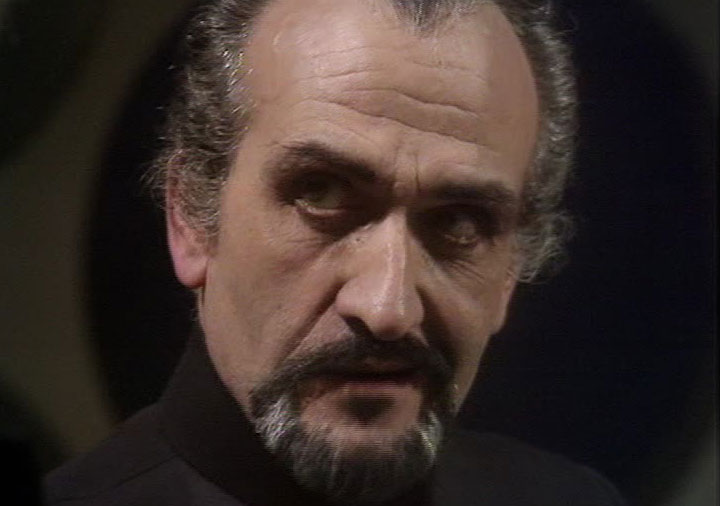
The Master.

If you look at it, it's pretty obvious.

First of all, we haven't seen the Master since 'The End of Time Part 2'.  Moffat's due a Master story.

Second, gathering up people who've died in the Doctor's name, probably to torment him? Sounds like a Master-ish thing to do.

Third, she's wearing all black, or at least dark colours.

Fourth, she calls him her boyfriend.  I mean, have you not seen that phone conversation in 'The Sound of Drums'? I mean, the Master's always trying to get the Doctor's attention, so why wouldn't he have been like, 'Well, if you like your Earth girls so much... *goes all glowy*'

Fifth, a female Master would be a good way to open people up to the possibility of a female Doctor in the futre.

But finally...

MISSY = MISTRESS = MASTER

I mean, it does rather stare you in the face, once you realise.

Personally, I think a female Master would be brilliant.  And if she's not brilliant, at least she couldn't possibly be as bad as when she was American.
Sweet Jesus, no, please no.

Monday, May 26, 2014

Review: X-Men: Days of Future Past

 It's about 10 years in the future, and evil robots are killing both mutant and human alike.  So Wolverine gets sent back to the 70s to try to stop Mystique from killing the robots' inventor, Tyrion Lannister, because a) this causes the humans to fear mutants even more, and b) she gets captured, experimented on and her DNA used to make the robots invincible.  There's a catch, though:  to get to Mystique, Wolverine has to get Professor X and Magneto talking to each other again.  This is far from an easy task, as not only is the enmity between them strongest, but Magneto's in a high-security metal-free cell beneath the Pentagon for his involvment in the Kennedy assassination, and Xavier has forsaken his powers because 'Nam's such a bummer, man.

Like all the X-Men movies, Days of Future Past delivers highly engaging action sequences and loads of laughs, especially since time travel creates situations where we can laugh at people in the past's lack of knowledge of things to come.  (My favorite--Beast's monitoring system for 'all three networks--and PBS!')  And it was great to see so many of the characters we haven't seen since the last proper X-Men movie--Kitty Pride, Storm, Iceman, and the older Xavier and Magneto, and a few cameos that were awesome but way too spoilery to mention here.  It was a bit of a shame that some of less familiar mutants introduced in First Class were missing--they got drafted or worse--but at least we got to meet Quicksilver as a teenager straight out of That 70s Show. The sequence where he helps break Magento out of jail is brilliant.

The highlight of the film, though is young Xavier's struggle to become the man we all know he'll be.  Massively depressed due to the closing of the school (students and teachers alike were being drafted in too great numbers), feeling betrayed by Mystique and Magneto, and unable to use his powers due to the cure for his paralysis, Xavier seems to have turned into a drunken selfish dickbag.  But we come to realise that what he really has to overcome is fear--fear of all the pain and suffering his powers expose him to.  There is a wonderfully heartwarming moment when young Charles meets older Professor X.  The only way the scene could have been better would be had Professor X told him to 'make it so.'

One thing that annoyed me about the Days of Future Past is what also bothered me about Wolverine:  Origins and First Class:  the massive slightly implausible battle at the end.  Now, all the X-Men movies have one, but in the past setting, they seem even harder to swallow.  It's a big leap of faith to believe mutants caused the Three Mile Island disaster or were involved in the Cuban Missle Crisis.  This time, it's even more bizarre, involving a baseball stadium and the White House.

The other thing I thought could be better was more time with young Xavier and Magneto working together.  X-Men 2 is still my favorite because I love it when they have to team up.  After the break-out, I was hoping to see this, but their time working as a team is shortlived, though, and soon Magneto is back to doing Magneto things.

Other than that, X-Men:  Days of Future Past is 2+ hours (was it really that long?) of solid entertainment.  And it's got pretty exciting prospects for the future of the X-Men franchise.  Without saying too much, the end basically reboots the entire universe.  Which means two things.  First of all, with no future continuity to worry about, we can see more of the retro origin story type films.  Second, with things changed, it means there's a whole new set of present X-Men stories to explore, especially given the reappearance at the very end of some much loved characters.

Imagine if The Last Stand never happened.  Beautiful.

Tuesday, April 15, 2014

Movie Review Round-Up

It occurs to me that it's been well over a year since I've written a movie review. Since I've seen 10 movies (theatrically) in that time, that sounds like the perfect number for a round-up of brief reviews.

Iron Man 3
Tony Stark experiences PTSD from the events of The Avengers as he goes up against the Mandarin.  Although the final battle was a bit over-long, this is perhaps my favorite of the Iron Man franchise.  It retains the levels of sarcastic Tony we saw in the previous Avengers universe film, which some people thought detracting, but which I thought the first two Iron Man films could have done with more of.  And the twist with the Mandarin, though not entirely unpredictable, was still hilarious and brilliant.

Future Me: Having watched these again, Iron Man shows itself to be the best of the bunch. Iron Man 3 is one of the MCU's middling efforts, but, still, not bad.

Star Trek Into Darkness
J. J. Abrams remakes Wrath of Khan with younger, prettier actors (Cumberbatch!!!).  Into Darkness follows up 2009's Star Trek by showing us more of how Kirk became Captain Kirk, instead of just letting him be Captain Kirk.  Plus, references to TOS seem a bit more forced this time around, and Uhura is reduced to having "relationship problems" with Spock.  It just wasn't any good.

The World's End
Five guys return to their home town to complete a pub crawl from their youth, only something's not quite right....  Simon Pegg and Edgar Wright team up once again to make one of their comedy homages, this time to science fiction films, particularly Invasion of the Body Snatchers.  With some familiar faces (Nick Frost plays the straight man this time around), they deliver entertainment and laughs.  It's good, but just not up to the levels of excellence of Shaun of the Dead and Hot Fuzz, which became even more apparent if, like me, you saw it in a Three Flavors of Cornetto screening. 


The Wolverine
Logan vows to protect the granddaughter of a Japanese soldier who saved his life, but there's something more sinister going on... something that might just make him mortal after all.  The Wolverine was quite unambitious, but that works in its favor.  It wasn't great, but it wasn't awful either, and delivered some solid entertainment and, apart from some obligatory Mecha, good action.

Sunshine on Leith
Two Scottish soldiers return from Afghanistan to face the complicated world of family, relationships, and... music!!  Set to the songs of the Proclaimers, Sunshine on Leith is the Scottish (filmed on location in Edinburgh and supported by Creative Scotland) musical that blows Brigadoon off the map.  It blends the working-class milieu of social realism with the musical in a way that shouldn't work, but totally does.  Vocal performances were good all around--yes, even Peter Mullan's.  And who knew the Reid twins wrote something other than "I'm Gonna Be (500 Miles)"!

Thor:  The Dark World
A bunch of Elves led by the 9th Doctor are coming back, and apparently their threat to not just Norway but all the realms is so great that Thor must team up with Loki to stop them.  It's certainly much better directed than the previous Thor movie--the action was better, the plot made a bit more sense, and the moments of humor seemed more appropriate--but it's still a Thor movie.  But on the plus side, it did have some great bromance bits between the two Asgardian brothers, some wonderful moments for Tom Hiddleston to do some proper acting, and a scene with Chris Hemsworth shirtless.

Future Me: AHAHAHAHAHAHAAAAAAA!!! Wow, was I wrong. The more I watch Thor, the more I love it. And the more I watch this piece of garbage, the more I hate it. The bits with Loki are good, though, and if it's on TV, I'll watch those parts, but not the rest.

The Hobbit:  The Desolation of Smaug
The bits from The Hobbit in between when they escape the Orcs in the Misty Mountains and when they run afoul of Smaug.  More so than An Unexpected Journey, Desolation of Smaug is really suffering from Peter Jackson's decision to split the book into three films.  Whereas Part 1 padded things out with character development and world building, Part 2 went with extended action sequences that felt really unnecessary.  As there isn't really much left from the book, I dread to see what Part 3 will have to offer.  Although I don't mind too much the material taken from The Silmarillion, it's the original stuff I don't much care for.  As a character, Tauriel was okay, but The Hobbit is already a great story; it doesn't need a superfluous romance.


The Lego Movie
Ordinary Lego figure Emmet gets mistaken for a Master Builder and has to stop President Business from destroying the world with the Kragle.  Full of in-jokes, cameos, and heartwarming moments, The Lego Movie was the most fun I've had at the cinema in years.  Yes, the message of "don't follow the rules" does seem a bit incongruous coming from a massive corporation like Lego, but the story delivers it well.  Everything is awesome!

Muppets Most Wanted
Kermit gets mistaken for the world's most wanted frog, who uses the Muppets' European tour to pull off the ultimate heist.  The movie opened with the brilliant musical number "We're Doing a Sequel", which was about how sequels are never as good as the original.  Sadly, this was a self-fulfilling prophecy.  Aside from some good jokes and the wonderful double act between CIA agent Sam the Eagle and his "European" counterpart from Interpol, it just didn't live up to the promise of The Muppets.  The story was a bit weak, and Walter is starting to get (even more) annoying.


Captain America:  The Winter Soldier 
Someone within S.H.I.E.L.D. is trying to kill Nick Fury, so, with no one they can trust, Captain America and Black Widow team up to stop them and the mysterious Winter Soldier.  Great action, solid story with a lot of intrigue and suspense.  I think Hydra have become my favorite Marvel villain (and meme).  There's a lot that can be done with Steve Rogers as a concept and a character, and that's perhaps why the Captain America franchise is the best one in the Avengers universe.


Ranking them, best to worst:
The Lego Movie
Sunshine on Leith
Captain American:  The Winter Soldier
Iron Man 3
The World's End
The Wolverine
Thor:  The Dark World
Muppets Most Wanted
The Hobbit: The Desolation of Smaug
Star Trek Into Darkness

Friday, June 21, 2013

John Hurt? John Hurt Who?

THIS POST CONTAINS SPOILERS FOR THE DOCTOR WHO SERIES 7 FINALE. DON'T SAY I DIDN'T WARN YOU.


'Oh, no! I feel a massive reveal coming up on my left!'
Like many of you, when it was revealed at the end of 'The Name of the Doctor' that John Hurt was going to be playing the Doctor, I was all like, WTF?!?!?  Let's review all the possibilties for what's going on here.

The 'Real' 9th Doctor
Probably the most popular  rumour going around says that Christopher Eccelston was actually the 10th Doctor, and that the Time Lord had a regeneration in between him and Paul McGann who actually did all the dirty work during the Time War. I don't much like this blantant rewriting of the continuity (as opposed to the whoops-it's-been-fifty-years-hey-you-try-to-remember-everything accidental type), but I have a feeling, given the prevalence of this theory and things John Hurt has actually said, that it might be true. However, if the current Doctor denies that, though they may be the same Time Lord, he isn't the Doctor, why was Hurt credited as 'The Doctor'?

The Doctor's Original Incarnation
Or at least a pre-Hartnell Doctor. It would be really interesting, wouldn't it, if William Hartnell was the first Doctor, but that he'd had other regenerations before that, especially if all his travelling through time and space was to attone for what the other(s) had done. 'Brain of Morbius' did imply that there were Doctors we hadn't seen, after all.

The Next Doctor
Now that we know Matt Smith is leaving, wouldn't it be amazing if they cast John Hurt as the next one?? Too much to hope for, though.

A Future Doctor
He could just be a possible future Doctor, and seeing him could potentially mess up his own time stream. However, the current Doctor's reaction suggests that there is a lot more to his dislike of the Hurt regeneration than just some wibbly wobbly timey wimeyness. Which leads me to....

A Potential Regeneration That the Doctor Does Not Want to Happen
Say the Doctor knows, through contact with him or others who know of him, that if a certain thing happens, then he will regenerate a certain way, and that will be bad. Very bad. The Doctor's apparent dislike of his Hurt regeneration could be because he's afraid that is what he will turn into. And who would the Doctor not like to become?

The Valeyard

'Look, it doesn't make sense to me, either, and it's my own plan!'
Yes, the guy from 'The Trial of a Time Lord' who tries to have the Doctor killed! The version of the Doctor that spins off of his final regeneration and is so evil even the Master fears him. They did drop a reference to him in 'The Name of the Doctor', after all...

A Valeyard-like Character
It would be a bit hard to explain what the Valeyard is doing back after he got trapped in the Matrix (not that one) at the end of 'Trial', but what if something similar happened when the 8th Doctor regenerated?  One version stayed the Doctor (Eccelston) and went around doing normal Doctor things, but the other version (Hurt) did all the ruthless stuff needed to destroy two civilizations and end the Time War. Well, I think it's interesting, anyway.

The Wibbly Wobbly Timey Wimey 9th Doctor
Christopher Eccelston is the 9th Doctor we know, but what if when the Great Intelligence went back into the Doctor's time stream, he messed things up, changed time, and this is the 9th Doctor that happened instead.  Based on some things John Hurt has said, I think this might even be more of a possibility than the whole Eccelston-is-really-the-10th thing. And, given that it actually deals with the consquences of messing with time, of the two options, I prefer this one.

Alternative Universe Doctor
Hurt could be the Doctor that could have happened had something else not happened. Like, since we're so hung up on him being the 9th Doctor, he could be the Doctor as he would have been had he not met Rose.  Or even had he not left Gallifrey in the first place.

Parallel Universe Doctor
Sounds the same but isn't. An alternative universe is a 'what if' universe, whereas parallel is one that runs along side and has slight (or major) variations on ours. Just like Pete's World has its Metacrisis Doctor, maybe there's another universe that has John Hurt as it's Doctor. However, running into a parallel version of oneself doesn't seem all that dangerous (see:  Mickey/Ricky), so why would our universe Doctor seem to dislike this one so much? And, if he were essentially a different Time Lord, what's he doing our Doctor's time stream?

The Metacrisis Regeneration
I've heard this theory a few times on the internet.  Matt Smith's Doctor actually dies, and so the Metacrisis Doctor comes back from Pete's World and regenerates into the next one.  However, given that the Doctor explicitly stated that Metacrisis Doctor can't regenerate, this is mostly wishful thinking by people who want more Tennant. Although, if you're going to mess with continuity, you might as well go all in....

But is it really Sylvester McCoy??
The Other
In some of the spin-off novels, it is said that Time Lord society was founded by Rassilon, Omega, and a mysterious person known only as 'The Other.' When the other two went mad with power (or something like that) The Other threw himself into the Matrix (again, not that one), and it is implied that, sometime in the future, he was re-loomed (apparently Time Lords can't have sex, they must be woven) as the Doctor. I doubt they would actually make John Hurt The Other, especially since if they did, fans would hunt Steven Moffat down with pitchforks.  Which they might do anyway, but still.

A Total Cop-out
Remember when it was announced that David Tennant would be leaving after the specials, and that the next Christmas special was going to be called 'The Next Doctor'? And the trailer had David Morrissey in it doing all sorts of Doctor-ish things? And we all thought 'OMG! David Morrissey is going to be the next Doctor!' And then it turned out he was just some bloke who thought he was the Doctor? Yeah, this. Honestly, I wouldn't put it past Moffat to make the whole 'Introducing John Hurt as the Doctor' thing an elaborate trick like this. I mean, we never did learn the Doctor's name during 'The Name of the Doctor', now, did we?

Wednesday, January 2, 2013

Review: Les Misérables

"Do you hear the people sing?/Singing the songs of angry men?/It is the music of the people/Who will not be slaves again!"

There have been many film and television adaptations of Victor Hugo's 1862 novel Les Misérables, but it has taken more than 30 years for the musical version to reach the screen.  It seems a long time since Les Mis, along with Cats and The Phantom of the Opera, was the hit, long-running show everyone had to go see.  However, this is not to say that the story has lost its relevance.  Far from it.

For those of you living in a cultural vacuum, Les Misérables tells the story of Jean Valjean, unfairly imprisoned for 20 years for stealing a loaf of bread.  Valjean is released on parole, and, thanks to a bishop's mercy, resolves to become a better man.  He assumes a different name and becomes a successful businessman and kind mayor.  But the intrepid Inspector Javert, the embodiment of the law, catches up with Valjean just as he is about to adopt the impoverished Cosette as a promise to her dying mother.  The two flee to Paris, and, years later, Revolution (of the 1832 variety) is in the air and Cosette is all grown up.  Naturally, she falls in love with one of the student revolutionaries, and Valjean is torn between keeping her to himself--and safe, now that Javert's in town to put down the uprising--and letting her go.

This newest version of  Les Mis, like the West End musical on which it is based, covers most of Hugo's novel, but dwells longest on the Revolution, and understandably so, as it provides the richest material for conflict--and stirring music.  Furthermore, in 1980, when the original French concept album was released, the barricades of '68 could not have been far from people's minds.  Easy parallels can be drawn between the Revolutions of the 19th Century and various movements of the 1960s; likewise, as I watched the student revolutionaries being fired on by soldiers, I couldn't help but think of the Occupy movement.  Hugo's interest in redemption from sin therefore becomes redemption of another sort--redemption of failed revolutions, redeemed by the hope that in the future they will not fail.

Directed by Academy Award winner Tom Hooper, Les Misérables (2012), deserves most of the hype it's been getting, though as I was watching it I could never shake the feeling that it would have been much better on stage.  The vocal performances, however, were excellent.  Hugh Jackman and Russell Crowe tap into their musical backgrounds to bring Valjean and Javert to life, and Anne Hathaway will probably receive an Oscar nomination from her small but power role as Cosette's mother Fantine.  Sasha Baron Cohen and Helena Bonham Carter were hilarious as the Thénardiers, and Daniel Huttlestone was cheeky and adorable as young Gavroche.  I wasn't too fond of Eddie Redmayne as Marius, not because his performance was bad, but because I kept thinking that I'd seen him play a privileged murderer on Inspector Lewis. (IMDB says he did not so IDK??)

Other than that, most of what I didn't care for in Les Misérables come from the source texts--both the novel and the play.  Musically speaking, I can't help compare it to the Andrew Lloyd Webber musicals that were its contemporaries.  Webber and his lyricists mastered turning even the most dry exposition into a catchy number; Les Mis, the English version, at least, has a lot of "I am singing what I am speaking" parts.  That being said, though, there are several memorable tunes--particularly "I Dreamed a Dream", "On My Own", and the above quoted "Do You Hear the People Sing?", which is even better in the original French.

My biggest issue with the story was Cosette and Marius.  Cosette suffers from Victorian Heroine Disease.  She's beautiful, virtuous, and BORING.  Men love her, but she doesn't seem to do anything other than being really sweet.  The more interesting women like Fantine and Éponine get killed off for their transgressions.  They don't get their happily ending like Cosette and Marius.  And that's another thing that bothered me:  as I was watching it, the ideological working of the narrative became very obvious.  The Revolution failed, and losing all those friends was sad, but only about one song's worth of sad.  Because the young hero goes back to his aristo granddad and marries the girl.  Who cares about the Revolution when there's a happily ever after!  And then Valjean dies and gets to go to heaven, where he joins everyone who died on the barricades--no more shooting, just singing!!

I'm not going to claim that the film--nor, indeed, the novel and the musical--doesn't offer alternative readings to this.  But part of the reason that I felt it would have been stronger on stage is the immediacy of the performance.  For the finale on stage, the singing actors are both dead--in the story--and alive in the presence of the living actor.  And so, there is hope for the future as they sing:

"Do you hear the people sing?/Say, do you hear the distant drums?/It is the future that they bring when tomorrow comes!"


Thursday, December 20, 2012

You'll Shoot Your Eye Out, Kid

Oh, Christmas.  You never actually live up to that wonderful picture of you we dream up in our heads, do you?  At least we have the movies to remind us of how good it used to be, right? 

Stealing the idea from something I wrote on MySpace back in the year two thousand and--um, you know what, we don't need dates, do we?--I'm presenting all you readers with the gift of my selective guide to holiday* movies.  And when I say selective, I mean selective.  I'm not even writing about all the Christmas movies I've seen.  For one thing, there's a whole bunch I can't remember because I saw them long ago on TV or something.  And for another thing, there's a whole bunch more that are so mind-numbingly awful I don't want to remember them.  So here are fifteen Christmassy films I think you need to check out right now or avoid at all costs. 

As charming as an eel.
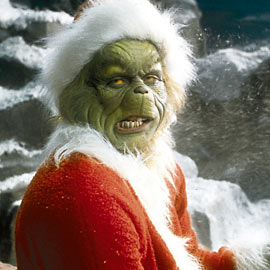
How the Grinch Stole Christmas (Ron Howard, 2000)
A version of the Dr. Seuss classic about, well, it pretty much does as it says on the tin.  The film made me weep.  Not because it was touching, mind you, but because IT WAS AN ATROCITY.  Stick to the Chuck Jones animated version.  Or, you know, the book.

Meet Me in St. Louis (Vincent Minnelli, 1944)
A year in the life of a family from St. Louis, Missouri, that culminates in the 1904 World's Fair.  So, um, other than the part where Judy Garland sings "Have Yourself a Merry Little Christmas", not really a Christmas movie, even though everyone claims it is.  Allegedly a Hollywood classic, I'm not overly fond of this film, mostly because it can't decide whether it wants to be a melodrama or a musical.

Love Actually (Richard Curtis, 2003)
Hugely popular, especially among every British person I know, I must confess that I don't care for it all that much.  As one of those inter-connected stories films, there were parts I liked (the kids are cute, and Alan Rickman and Emma Thompson turn in stellar performances, as usual), and parts I didn't (getting Colin Firth wet? Yeah, like that's never been done in everything he's ever been in).  Over all, it's probably not a bad film.  Curtis is, of course, the master of the romantic comedy.  I hate romantic comedies.

The Bishop's Wife (Henry Coster, 1947)
An angel comes down from heaven to help a bishop get his church built, and along the way sort-of falls in love with his wife.  Another alleged classic, I've always found it boring and much prefer the 1996 remake The Preacher's Wife.  Not that it's any better; it's just got singing.

The Santa Clause (John Pasquin, 1994)
Santa falls off a roof and dies, and the guy that finds him winds up putting on the suit and delivering presents.  Only problem is, he forgot to read the fine print and winds up the new Santa Claus.  Not the best movie by any means, it is, however, some solid family entertainment.  The sequels, though, were crap.

Miracle on 34th Street (George Seaton, 1947)
Natalie Wood plays an adorable little girl who doesn't believe in Santa Claus!  But then her mother, who works for Macy's, hires a guy who claims to be the real thing.  Never been one of my favorites, but it's a good movie, and a true holiday classic.  Unfortunately, the colorized version from the 1970s still seems to be in circulation, and the remake is one to be avoided.

Shabbat shalom, motherfuckers!
The Hebrew Hammer (Jonathan Kesselman, 2003)
In this Jewsploitation flick, detective Mordecai Jefferson Carver (he's like Shaft, but 100% kosher) has to save Chanukah from Santa's evil son.  Very funny, though some of the jokes do require at least a minor in Jewish Studies to get, and even then you'll still be wondering if you really ought to be laughing at them.  But, hey, it's not like there are that many other Chanukah movies out there anyway.

Christmas in Connecticut (Peter Godfrey, 1945)
A house and home columnist's editor invites himself over to her farm for Christmas, bringing a handsome war hero with him.  Only problem:  she's really a Manhattan career woman whose cooking skills don't exceed a trip to the corner deli.  Hilarity ensues.

The Muppet Christmas Carol (Brian Henson, 1992)
What's a list of Christmas movies without one of the 10 gazillion versions of A Christmas Carol?  This might not be my absolute favorite, but it's definitely one of the best.  And--Muppets!  What's not to love?  Gonzo makes a perfect Charles Dickens, though I'm not sure about the historical accuracy of his talking rat sidekick.  (Big blue nose, on the other hand....)

Home Alone (Chris Columbus, 1990)
Kevin lives any kid's dream of having the whole house to himself when his family accidentally leaves him behind on a visit to relatives in Paris for Christmas.  But then he has to defend his house against the pair of crooks burgling the neighborhood.  Cringe-worthily painful (yet still funny) slapstick ensues, as well as some heartwarming stuff.  

White Christmas (Michael Curtiz, 1954)
Hit duo Wallace and Davis get lured to a struggling Vermont ski resort by a pair of singing sisters only to find that it's being run by their old general.  What can they do to help him?  Put on a show, of course!  Yeah, the plot may seem a bit silly, but it's got humor, romance, song and dance numbers (plus both Technicolor and VistaVision!), and the Irving Berlin classics "Counting Your Blessings" and, of course, "White Christmas".

Chimneys are for wimps.
Die Hard (John McTiernan, 1988)
When Hans Gruber and his pack of terrorists take over Fox--um, I mean, Nakatomi Plaza, they didn't count on one of the employees being married to John McClane.  Ass-kicking ensues.  Hey, who says Christmas movies have to be all warm and fuzzy?  Yippee-ki-yay, motherfucker!

A Christmas Story (Bob Clark, 1983)
All Ralphie wants for Christmas is an official Red Ryder Carbine-Action Two-Hundred-Shot Range Model Air Rifle, but the adults in his life seem to be conspiring against his attempts to get one.  Dripping with nostalgia, the film is nevertheless a hilarious look at what it was like when the most important thing in your life was getting that one thing you wanted.  Also:  sexy lamp.

National Lampoon's Christmas Vacation (Jeremiah S. Chechik, 1989)
Clark Griswold invites the whole extended family over for an Old Fashioned Family Christmas.  What could possibly go wrong?  Everything.  From exterior illumination, to squirrels in the Christmas tree, Cousin Eddie and yuppie neighbors, Christmas Vacation is jam-packed with seasonal laughs.  Easily the best Christmas movie of the last 50 years. 

It's a Wonderful Life (Frank Capra, 1946)
George Bailey's at the end of his rope--feeling like he's always lived for others and got nothing for himself--and he's starting to think that maybe everyone would be better off without him.  So the angel Clarence, hoping to earn his wings, comes down to show George just what life would be like if he'd never been born.  Overexposure in past decades has caused a lot of people to look down on this film, but it's not only heartwarming, it's inspiring.  These days especially, we need Capra's reminder that "No man is a failure who has friends." 

Future Me: Elf is great. Go watch Elf.  


*I'm not being P.C., I'm being accurate.  They're not just movies about Christmas.

Tuesday, November 6, 2012

Me and My Uterus Are Voting for Obama

Look, I don't like to talk politics too often, and I doubt the endorsement of one tiny little blog among millions (published on Election Day, no less) is going to do much difference, but Here Be Sarcasm is being sincere for a minute and declaring it's voting for Obama. 

Why, you ask?  Well, there are many different reasons.  I could cite health care, gay marriage, Big Bird, the economy (Think slow recovery's all his fault?  Take a look at who's been running Congress since the mid-term elections.), and so on.  But there is one reason that has become extremely important over this campaign season. 

I am a woman. 

The Republican party has shown itself this year to be very anti-women's interests.  A few choice examples:

  • All the anti-choice laws that have been passed or proposed at the state/local level, ranging from the standard limits on how far into the pregnancy a woman can have an abortion, to the extremes evidenced by the Arizona law that states pregnancy begins at a woman's last period and the odious Virgina law that requires a woman to have a vaginal ultrasound before having an abortion. 
  • Senate candidate Todd Akin's comment earlier this year that abortion for rape victims is unnecessary because if a woman is legitimately raped her body will protect her from getting pregnant.  And we can add to that my very own Congressional representative Joe Walsh, who claimed that with modern technology there's no such thing as medically necessary abortions these days (thankfully I'd already cast my absentee ballot for Tammy Duckworth), and Senate candidate Richard Mourdock, who claimed that pregnancy from rape is God's will.  Mourdock backtracked from the implications of that unfortunate statement, but that he didn't even consider what his words meant is telling--and not just for him, but for the party that refuses to disavow what he and these other men have said.  It is clearly insensitive as well as ignorant of the simple matter of how the female body works, let alone complex issues like the psychological state of a rape victim or the possible complications of pregnancy.
  • Many Republican general policies have a negative effect on women's rights and well-being.  The anti-gay marriage stance would restrict a woman's right to marry the person she loves if that person happened to be another woman.  Repealing the Affordable Care Act, as many Republican candidates claim they will do, would mean a return to paying for cancer screening and contraception.  And of course, the recession has been tough on women as well.  Economic recovery has been slow (again, not entirely the President's fault), but what exactly will Romney lead the Republicans to do?  I wasn't too sure, so I looked it up on this handy BBC News infographic:  apparently, his solution is to cut spending (especially health care) and roll back the regulations that were implemented as a result of the bad banking that got us into this mess in the first place. 
Of course, Mitt Romney himself is very pro-women.  So much so that he kept "binders full" of them while picking his staff as governor of Massachusetts.  This condescension he displayed at the debates goes hand in hand with that "47%" comment he made to donors.  Do we really want our leader to look on so many of us with such contempt? 

Speaking without my ovaries for a minute, I'd be voting for Obama anyway.  My political leanings are left of center, so the center-left Democrats are the best option in a national election.  (The futility of voting for a third party above the state and local level is a blog for another day.)  But I will say that I lived in Boston while Romney was governor, and it wasn't the worst thing in the world.  I mean, he's certainly less terrifying than, say, Rick Santorum (NSFW).  However, he has succumbed to that same sickness that seemed to overcome John McCain four years ago:  changing face for the election.  Romney used to be pro-choice, but now that he's running for President he's anti-choice.  Repealing the Affordable Care Act?  Would that be the one that's designed to work like the one Romney signed into law while governor of Massachusetts?  And though Romney himself is a fiscal conservative, center-right Republican, by choosing Paul Ryan as his running mate, he has attached himself to the right wing Tea Party nut-jobs.  I know all politicians lie, but how can you trust someone who makes such dramatic about-faces?

Anyway, the important thing is that you get out and vote.  No matter who your candidate is, let your voice be heard. 

So no matter who wins, the will of the people will have prevailed, and democracy--oh, sod it!  If Obama looses I'm never talking to any of you idiots ever again!! 

Wednesday, October 3, 2012

British Actor of the Month: Double O-dition

On October 5, 1962, two things happened that would have a profound impact on the music world. 

The first was that The Beatles released "Love Me Do."

The second was that, with the premier of Dr No, audiences were introduced to one of the most iconic movie themes ever. 

The last one also might be a bit important for the film world.  Just a bit. 

So to celebrate the 50th anniversary of the James Bond franchise, we're profiling the five British actors who have wowed cinema audiences as 007.  And we might as well include George Lazenby while we're at it. 

Do you ecshpect me to talk?
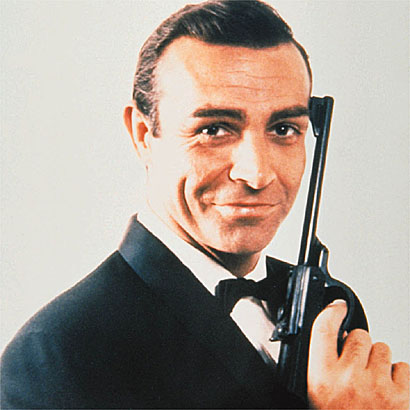
Sean Connery
A former Edinburgh milkman, Connery was the first actor to play Bond.  Longtime fan favorite, Connery made a huge impact on the character (even inspiring Ian Flemming to give his creation a Scottish heritage), something subsequent Bonds have had to deal with.  Highlights:  Dr No, From Russia with Love, Goldfinger, Thunderball  Lowlights:  You Only Live Twice, Diamonds Are Forever, and the "unofficial" Never Say Never Again  Also Known For:  Playing the (Scottish) Spaniard in Highlander and the (Scottish) Russian submarine captain in The Hunt for Red October.  Is also Indiana Jones's father and an Oscar winner for The Untouchables.

No, you're not the other guy
George Lazenby
Australian actor Lazenby was the first to take over after Connery left.  Fearing typecasting, he left after one go.  Not too many fans were disappointed.  Highlights:  On Her Majesty's Secret Service.  Really, it's one of the better Bond films.  Lowlights:  On Her Majesty's Secret Service.  Really, he is the worst Bond to date.  Also Known For:  Being the "George Lazenby" of the Bond franchise.

[Insert double entendre here]
Roger Moore
The first actor to take over after Connery's brief return, Moore has been the longest-running Bond and appeared in the most official Bond movies.  Moore played the role a bit more tongue-in-cheek than his predecessors, and his era was also known for its ridculously overblown plots.  Highlights:  The Man with the Golden Gun, The Spy Who Loved Me, For Your Eyes Only  Lowlights:  Live and Let Die, Moonraker, Octopussy, A View to a Kill  Also Known For:  Starring in the TV series The Saint.

Needs ice cream
Timothy Dalton 
Reportedly the choice producers had to replace Connery even as far back as On Her Majesty's, Dalton has perhaps been the most "serious" Bond to date.  The plots from his era were more concerned with "real world" spy senarios.  Highlights:  The Living Daylights, even though Bond does end up helping the Taliban fight the Soviets.  Lowlights:  Licence to Kill  Also Known For:  Argueably the only actor to be better known for not playing Bond, Dalton is a highly respected Shakesperian actor who played Rochester in the BBC's 1980s version of Jane Eyre and the Time Lord president in David Tennant's last episode of Doctor Who.  You might also have recognized him in Hot Fuzz.

Shaken, not stirred
Pierce Brosnan
Reportedly the producers' choice to replace Moore, Brosnan was unavailable, so they went with Dalton.  His performance tended to blend Dalton's grittiness with Moore's sense of humor, and, likewise, the films were the right balance of realistic and riddiculous.  Highlights:  Goldeneye, Tomorrow Never Dies, The World Is Not Enough  Lowlights:  Die Another Day  Also Known For:  Starring in the TV series Remmington Steele

Blonde Bond?!?


Daniel Craig
Though the color of his hair created a stir when his casting was announced, Craig is fast becoming as much a fan favorite as Sean Connery.  The franchise has gone through a bit of a reboot lately to focuse on how Bond became Bond, which some have seen as a rejuvenation, and others as a rip-off of the Jason Bourne franchise.  Highlights:  Casino Royale (2006), Skyfall, Spectre, and this  Lowlights:  Quantum of Solace  Also Known For:  Starring in the English-language remakes of Stig Larson's Millenium series

Saturday, September 22, 2012

UpDown v. Downton

Hit British television drama Downton Abbey is beginning its third series.  But how does it stack up to the beloved 1970s program Upstairs Downstairs?

The Crawleys have so much money their household has to be shot in widescreen.
The Old Guard:  Because in a show about social changes in the early 20th Century, someone's got to represent the old world, right?
Lady Marjorie Bellamy:  Richard Bellamy's wife is an earl's daughter, and as such represents the mores and aspirations of the uppermost of the Edwardian upper class.  Unable to face the changing times, she takes a trip on a little boat known as the Titanic and is never seen again.
Violet Crawley, the Dowager Countess of Grantham:  Perfers things they way they used to be, but, unlike her UpDown counterpart, she doesn't fade away.  Oh, no, Violet uses sarcasm and wit to voice her displeasure at everything modern.
Winner:  Violet.  Lady Marjorie came across as a very unsympathetic character (rumor has it that Rachel Gurney hated playing her so much she begged to be killed off), whereas Violet's sense of humor makes her endearing no matter how old-fashioned she is.  Plus, she's one bad-ass grandma!
 
The Suffragette:  Neither Eaton Place nor Downton was safe from intrusion of radical politics at the hands of a feisty daughter.
Elizabeth Bellamy:  Dabbled in feminism, married a gay socialist poet and had a child by his publisher.  Then, at the beginning of Series 3 we're told she's happily (re?)married and living in New York with her kids.
Lady Sybil Crawley:  Wears trousers, attends political rallies, becomes a nurse, and marries the Irish nationalist chauffer.  As of the Christmas special, she was exiled to Dublin and expecting.
Winner:  Lady Sybil.  Both girls got put on a bus (metaphorically speaking), but Sybil stuck to her principles and now she's back for Series 3. 

The Young(ish) Upstart:  Someone's actually got to spark change while the young ones are busy shouting silly things like "Votes for Women."
Virginia Hamilton:  The war widow who comes to Richard for help for her son who's being tried for cowardice.  She keeps pestering him about various things until he finally marries her.
Isobel Crawley:  Matthew's mother, a quasi-socialist reformer who sees in Downton a great opportunity for change.  Naturally, she and Violet butt heads in nearly every episode.
Winner:  Isobel.  Viginia may inject 165 with a (somewhat) youthful vigor, but Isobel gets things done, whether Violet likes it or not.
  
The Wounded War Hero:  Because even rich people can't escape the horrors of war.  Or, can they...?
James Bellamy:  Badly injured at the front, he's brought home and is able to make a full recovery from his wounds.  But the emotional scars are deep, and, already a volatile personality, James falls deeper and deeper into depression over the course of the 1920s until he takes his own life at the end of Series 5.
Matthew Crawley:  Looses the use of his legs.  But--even worse!!--his paralysis renders him impotent and unable to produce an heir.  Luckily, though, Matthew was misdiagnosed and regains the use of his limbs.
Winner:  James, because Matthew's whole "It's a miracle!" situation was just riddiculous.  It's more realistic that the costs of war have long-term effects.  Unless, of course, Matthew hasn't regained the use of all of his limbs....

Kissing Cousins:  Hey, what's the English aristocracy without a little romance between people who are distantly related?
James and Georginia Worsely:  Step-cousins who have a fling at the front during the War.  Though Georginia is an adult, James, her step-father's only male relative, is technically her guardian.
Matthew and Lady Mary Crawley:  Matthew is Lord Grantham's third cousin and heir to his estate.  So that means he'll get all the money and property that would fairly be Mary's.  But hey, they love each other!  Uh... right?
Winner:  James and Georginia.  Vaguely incestous adultery is far sleazier than money-grubbing love.

Ill-fated Lady Loves:  Both James Bellamy and Matthew Crawley marry (or nearly marry) women they don't really love who then, naturally, have to be written out.  How do they compare?
Hazel Forrest:  Daughter-of-the-middle-class Hazel is introduced in Series 3 as Richard's secretary.  James, who loves to slum it, marries her and she struggles in her new role but manages to hold 165 Eaton Place together during the War.  A victim of the influenza epidemic, Hazel is the only member of the household not to make it through Series 4--uh, I mean, World War I.
Lavinia Swire:  Series 2 opens and--surprise!--Matthew is engaged to the drippy daughter of one of his lawyer friends.  Lavinia pops up occasionally to complicate Matthew and Mary's relationship, though she does stand by her man when it looks like all three of his legs don't work.  She suddenly dies of what seems like a case of the sniffles, but is actually the same thing that killed Hazel.  What a conicidence!
Winner:  Hazel, because, as a real character and not a convienient plot device, her death is actually sad.


Just like a family... but not.
(Un)Dignified Butler:  Managing a well-run house has got to put a lot of pressure on a man.  Even the best of the best have to let that decorum slip sometimes.
Hudson:  During a mid-life crisis, he proposes to a housemaid and is so embarassed he almost quits when she, who thinks of him like a father, turns him down.
Carson:  Used to be part of a music hall double act.
Winner:  Carson, because that is well cool. 

Baby Crazy:  The downstairs of both 165 and Downton are in the capable hands of Mrs. Bridges and Mrs. Hughes respectively.  But sometimes, they can both have their bizzare out of character moments.
Mrs. Bridges:  Feeling responsible for the original kitchen maid's suicide, Mrs. Bridges kidnaps a baby, and only manages to avoid prison when Hudson tells the judge they'll get married when they retire.
Mrs. Hughes:  Feeling guilty that the housemaid she chucked out for sleeping with a soldier winds up pregnant, she steals food for, financially supports, and tries to help the mother and child connect with the father's family.
Winner:  Mrs. Bridges not only takes the crazy cake, she also wins because, apart from her and Hudson getting married, this incident was fortuneately never mentioned again.  Mrs. Hughes's moment of baby crazy became a tedious Series 2 subplot.

Unlucky at Love:  It's hard enough to find a man while you're in service, but add in a World War, and it's a one-way ticket to spinster city.
Rose:  Before the series begins, she lost a finace in the Boer Wars, and then looses a second in WWI.  Plus, an attraction to Thomas (the chauffeur) ends when he starts flirting with her best friend.  As of the second series of the reboot, Rose is still single, and now she's got tuberculosis.
Anna:  Ah, Bates and Anna.  Will they?  Won't they?  What about his wife? Oh,  now she's dead so they can get married.  But now he's on trial for murder!  And he's got the death sentence!!  But it's been commuted!  Will Anna be able to prove his innocence... ENOUGH ALREADY!!!
Winner:  Rose.  There's so much more to her story than just the romance.  Plus, TB.  Dude, that is sad. 

Scheming Servants:  You can't trust the help under normal circustances, but when they put their heads together, watch out!
Thomas and Sarah:  Sarah's ambitions lead her in and out of service and to her getting knocked up by her employer's son.  Thomas is more cunning in his manipulations of his master to work his way up from valet to chauffer.  When Thomas and Sarah's affair results in her pregnancy, the pair use it as a means to get Mr. Bellamy to give them money to start their own business.
Thomas and O'Brien:  This unlikely pair of footman and lady's maid look out for each other's interests like they're on Survivor:  Servants' Hall.  They are particularly ruthless in their attempts to get Bates, Lord Grantham's valet, fired.
Winner:  Tie.  Thomas and Sarah are as adorable as Thomas and O'Brien are despicable.  And while the latter pair seem to be more what we'd think of as "scheming," unlike the former, they have yet to feature in their own spin-off series.

Soldier Boy:  Just because you serve one the greatest households in all England does not exempt you from getting blown to smithereens for King and Country!
Edward:  165's footman doesn't want to go to war, but gives in to pressure and enlists.  Marries his sweetheart Daisy, the housemaid, and comes back with a bad case of shell shock.
William:  Downton's footman is nervous about going to war, but misses a lot of it thanks to Violet's scheme to make sure the house has a full staff.  Eventually becomes Matthew's assistant and is fatally wounded when the two of them are blown up.  He marries his sweetheart Daisy, the kitchen maid, on his deathbed. 
Winner:  Generally, I prefer Eddie's cheekiness, but William really fits the young solider stereotype better.  And, his death was sad.  Like, really sad.  I cried.

Downstairs Dim-wit:  With all the melodrama going on upstairs, the kitchen is the perfect place for a little comic relief.
Ruby:  The bane of Mrs. Bridges's existence, Eaton Place's kitchen maid is as incompetant in the kitchen as she is about personal hygene.  (Pictured above:  third row, second from left.  See that hair??)  However, she does on occasion display some cunning, like her plot to get all of the Hudsons's money when they die. 
Daisy:  More suggestible than stupid, Daisy is actually a competant assistant in the kitchen, but her problem is that she doesn't really like to say no to people.  Lately, though, she's been standing up for herself a great deal more.
Winner:  Ruby.  It was hard to decide, but Daisy's starting to get her own story lines now, whereas Ruby was always the punchline.